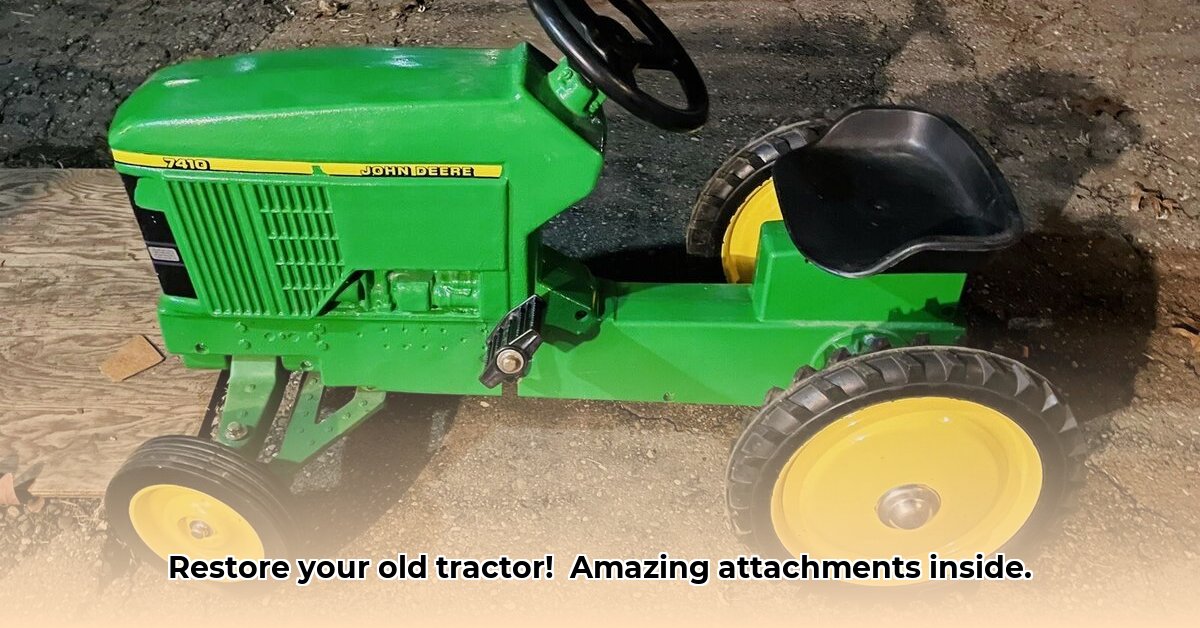
Pedal Tractor Attachments: Rev Up Your Restoration Project!
Ready to breathe new life into your vintage pedal tractor? Finding the right attachments can transform it from a simple toy into a fully functioning miniature farm! This guide will walk you through identifying, restoring, and installing common accessories, turning your restoration project into a fun and rewarding experience. Did you know that restoring a pedal tractor can be a fantastic bonding experience for families, fostering creativity and teamwork? For more on 3-point hitch implements, see this helpful resource.
A Field Guide to Common Pedal Tractor Attachments
Pedal tractor attachments are the accessories that truly bring your miniature farming fantasies to life. Let's explore the most popular types:
Implements:
- Plow: A metal blade, often adjustable for plowing depth. Look for manufacturer markings and note the blade's condition. Restoration involves cleaning rust, repairing dents, and repainting for protection.
- Cultivator: Features several tines or blades for tilling the soil. Inspect for broken or bent tines; sharpening the blades is crucial for optimal performance.
- Harvester: A miniature mechanism for collecting pretend crops. Check for wear and tear; lubrication can often improve functionality.
Trailers:
- Wagon: Typically made of wood or metal with wheels. Repair damaged wood, replace rusted metal parts, and lubricate the wheels for smooth operation.
- Dump Trailer: A tilting bed for easy unloading. Inspect the tilting mechanism for damage and reinforce any weak points.
Other Attachments:
- Snow Plow: A plastic or metal blade for clearing snow. Inspect for cracks before repainting for a fresh look.
Restoring Your Pedal Tractor Attachments: A Step-by-Step Guide
Let's focus on restoring a common attachment: the plow. Many of these steps can be adapted to other accessories. Remember, a successful restoration combines careful attention to detail with a dose of patience.
Step 1: Assessment: Thoroughly inspect the plow for damage (broken parts, rust, missing pieces). Photography is key for documenting the process and aiding reassembly.
Step 2: Deep Clean: Use a wire brush to remove loose rust and dirt. A degreaser tackles stubborn grime; rinse thoroughly.
Step 3: Repair and Replacement: Minor dents might be fixable with a hammer; significant damage might require welding. Source replacement parts if necessary (more on this later!).
Step 4: Finishing Touches: Use rust-preventive primer before applying outdoor paint. Allow the paint to dry completely.
Step 5: Reattachment: Securely reattach the plow to your tractor, referencing original designs or instructions when available.
Troubleshooting Your Pedal Tractor Attachments: Common Issues and Solutions
Even seasoned restorers encounter challenges. Here's how to tackle common problems:
- Attachment Doesn't Fit: Double-check compatibility; minor adjustments might be needed. Different tractor models have varying attachment points.
- Missing Parts: Online marketplaces (eBay, Etsy) often have vintage toy parts, or consider custom fabrication.
- Loose Components: Tighten loose bolts and screws; replace if necessary.
Where to Find Pedal Tractor Attachment Parts: Your Treasure Hunt Begins!
Finding replacement parts is often an exciting adventure!
- Online Marketplaces: eBay and Etsy offer a vast selection of vintage parts.
- Local Dealerships and Antique Stores: These can be invaluable sources for hard-to-find items.
- Specialized Online Retailers: Some businesses specialize in vintage toy parts; research reputable suppliers.
Remember, restoring these attachments isn't just about fixing things; it's about preserving a piece of history and creating lasting memories. So, gather your tools, and let the restoration begin!
How to Identify Rare Vintage Pedal Tractor Parts for Restoration
Key Takeaways:
- Identifying vintage parts requires careful examination of markings, construction, and unique features.
- Sourcing original parts can be challenging; reproductions or modifications may be necessary.
- Restoration involves cleaning, repairing, and repainting, often requiring specialized tools and knowledge. Online communities and specialized suppliers are valuable resources.
- Authentic restoration balances originality with practicality.
Common Pedal Tractor Attachments and Their Identification
Vintage pedal tractor attachments unlock a new level of imaginative play and restoration projects. Finding the right parts can be a thrilling treasure hunt.
1. Plows: Look for manufacturer markings (cast into the metal – John Deere, International Harvester, etc.), design features (one-bottom or two-bottom), and the shape of the share and moldboard.
2. Trailers: Check for manufacturer logos or markings (often near the hitch or side panel), size, design (simple dump trailer or more elaborate), and construction material (steel, wood, or combination).
3. Cultivators: Look for manufacturer marks, the number of tines and their arrangement, and overall design and construction.
4. Other Attachments: Research less common accessories unique to certain manufacturers using detailed image searches and online comparisons.
Restoration Techniques: A Step-by-Step Guide
Restoring attachments is a rewarding process:
Step 1: Assessment and Disassembly: Carefully examine the attachment, take detailed photographs, and disassemble it methodically, documenting each step.
Step 2: Cleaning: Thoroughly clean each part using appropriate solvents and brushes, being gentle with delicate components. Remove rust with a wire brush or chemical stripper.
Step 3: Repair and Replacement: Repair components where possible. Source replacements for damaged or missing parts—online communities and vintage toy shops can be very helpful here.
Step 4: Reassembly: Carefully reassemble the attachment, referring to your photographs. Ensure everything works smoothly.
Step 5: Painting and Finishing: Apply a suitable primer and paint; match the original color if authenticity is important.
Sourcing Rare Parts
Finding rare parts can be challenging, but here are helpful tips:
- Online Forums and Communities: Connect with fellow enthusiasts online.
- Antique Toy Shops and Shows: These are excellent places to find rare parts.
- eBay and Other Online Marketplaces: These offer a wide variety of parts; research seller reputation.
Troubleshooting and Problem-Solving
Detailed photographs taken during disassembly will be invaluable for troubleshooting and reassembly. Online communities can offer expert advice.